



Secret language of postage stamps
The Secret Language of Postage Stamps: Hidden Messages on Letters and Postcards
You may have noticed that on some old letters or postcards, the postage stamp is placed in an unusual position—tilted, upside down, or stuck in a strange corner. At first glance, it may look like carelessness, but in the past, it was often intentional.
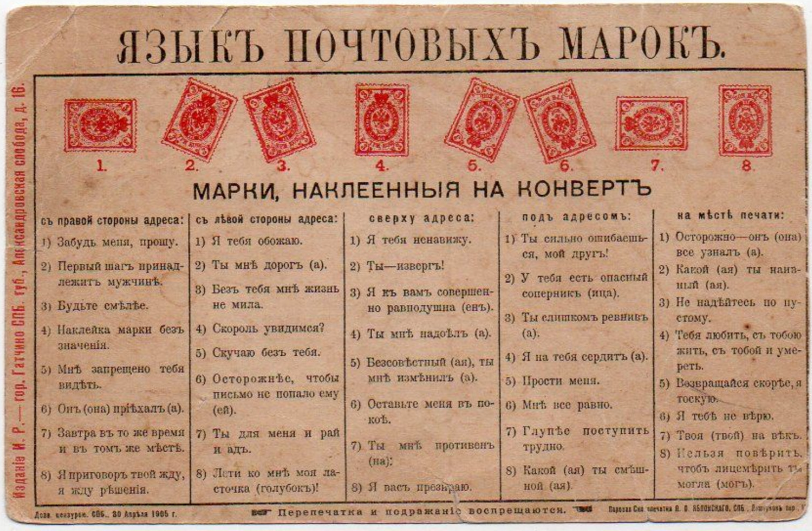
In the late 19th and early 20th centuries, a phenomenon emerged that collectors today call the “secret language of postage stamps”. The position and orientation of the stamp could carry a hidden message from the sender to the recipient—something the sender did not want to write openly in the text.
For example, a stamp placed horizontally on the right side of the address could convey a discreet message such as:
“Forget me, please!”
Fig. 1: A postcard from Imperial Russia showing the “language of postage stamps”.
A Hidden Message or Just Coincidence?
Determining whether a stamp was placed intentionally or simply by accident is nearly impossible today. Nevertheless, this small detail represents a charming and amusing fragment of postal history that adds character to old letters and postcards.
Collectors encounter this phenomenon most often on items from the turn of the century, though it occasionally appears in later periods as well. For philatelists and deltiologists, it is a delightful reminder of a time when people found creative ways to communicate subtle emotions.
Please, see our offer of the old postcards:
Photo used in this article – private collection of the author.