



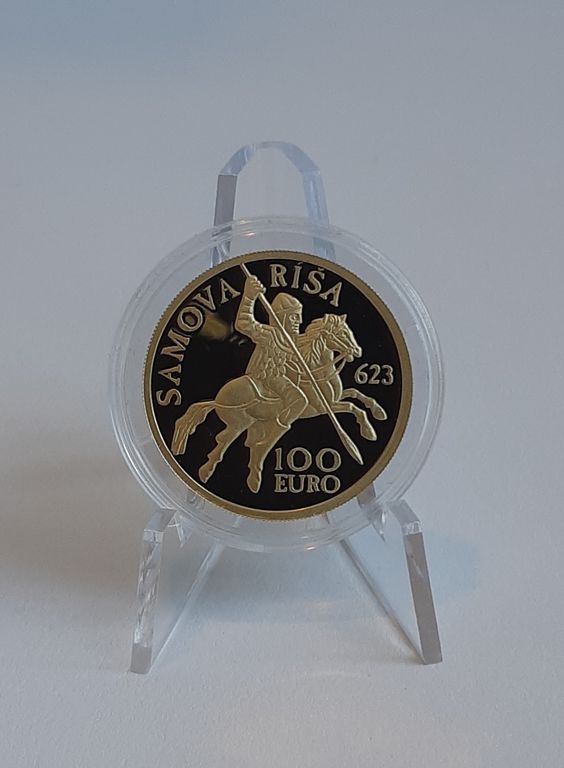
What Is Numismatics and Notaphily? Their History and Why Investing in Coins Makes Sense.
What Is Numismatics and Notaphily? Their History and Why Investing in Coins Makes Sense
Numismatics has long been known as the “hobby of kings,” attracting enthusiasts since ancient times.
For centuries, collectors proudly curated private collections of coins, and while coin collecting was once a privilege of the elite,
it gradually became accessible to the wider public—yet it still retains its noble charm.
Even in today’s fast-paced world, there are people who prefer cultivating timeless hobbies over scrolling through social media.
Numismatics and notaphily are not only sentimental pursuits involving coins and banknotes—they also represent an alternative form of investment.
Whether you are fascinated by investment coins or old banknotes rich with history, you are in the right place.
Numismatics as a Science and a Collecting Hobby
In its broadest sense, numismatics is a historical discipline that studies payment instruments.
These include not only coins but also banknotes, treasury notes, bills of exchange, checks, securities, vouchers, tokens, and other forms of currency.
Most commonly, however, numismatics is understood as the study of metal money—coins and medals.
It examines them from economic and social perspectives and explains their role throughout history.
Interested in numismatics? Explore the coins we offer
But numismatics is not only a science. For many, the word immediately evokes the image of coin collecting—a passion that has fascinated generations of collectors.
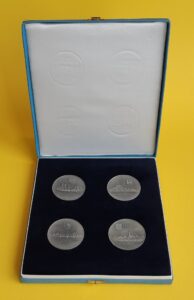
Every collector has different preferences. Some focus on circulated coins, others seek rare minting errors.
Some enjoy commemorative coins, others historical pieces, and many are passionate about medals.
How to Determine the Value of Collector Coins
Not all coins are created equal. So how do you know whether the coin you found in your grandparents’ attic is just a piece of metal—or a valuable collectible?
Valuing coins is not as straightforward as it may seem. Like everything in a market economy, the value of collector coins depends on many variables.
Need expert advice? We’re here to help.
You might be surprised to learn that age is not always the most important factor.
The most significant factor influencing a coin’s price is demand, which is not always predictable.
Sometimes a coin’s artistic value determines its future success; other times it is the limited mintage or the commemorative event behind its creation.
Demand is also shaped by historical context and unexpected events, which directly affect a coin’s popularity and value.
Among these unexpected factors are minting errors—accidental deviations that occur during production.
Coins with minting errors, unusual historical backgrounds, or those that rarely appear on the market are exactly the types that can bring a significant profit thanks to their uniqueness, even if they are not particularly old.
A coin’s value is also influenced by its artistic merit, as each piece is designed by a specific artist or medalist.
Another key factor is the coin’s condition and strike quality.
As for materials, you can’t go wrong with gold or silver coins with a fineness of at least 900/1000.
Even if a coin loses some of its collector value over time, it still retains the intrinsic value of the precious metal it is made from.
The History of Numismatics Around the World
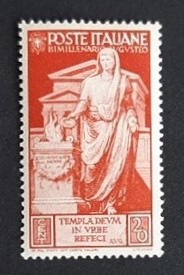
The earliest references to coin collecting date back to antiquity. One of the first known collectors was the Roman emperor Octavian Augustus,
the adopted son of Julius Caesar. He enjoyed collecting foreign coins, which he later used as diplomatic gifts for other rulers.
Another early pioneer of numismatics was the Florentine Renaissance poet and scholar Francesco Petrarca.
In his writings, he described how he purchased foreign coins from vineyard workers and tried to guess the names of the rulers depicted on them.
In 1514, the first book dedicated to coins was published: De Asse et Partibus by Guillaume Budé.
It discussed the history of coins, collecting practices, and prominent collectors, including emperors, nobles, popes, and kings.
Numismatics is often called the “hobby of kings,” and for good reason. Among the most famous collectors were
Holy Roman Emperor Maximilian I, Pope Benedict VIII, and King Henry IV of France.
Numismatics became an academic discipline in the 17th century. The term comes from the Greek word nómisma, meaning “coin.”
The field studies the history of coins, currencies, prices, and wages, as well as the preservation of coins, medals, and plaques.
Collectors gradually formed organized numismatic societies in the 19th century.
They published journals and documented coin finds in their regions. Many of these societies continue their work today.
Some of the most influential organizations include The American Numismatic Society,
The Royal Numismatic Society, as well as the Czech Numismatic Society and the
Slovak Numismatic Society in Central Europe.
The History of Numismatics in Slovakia
In Slovakia, the roots of numismatics as a collecting hobby reach deep into the past.
The first known collections were owned by the scholar Ján Benedikt Sambucus and Ján Dernschwamm, the administrator of the Turz family mint, in the 16th century.
A significant figure in Slovak numismatics was Matej Bel (1648–1749), who helped establish the coin collection of the Evangelical Lyceum in Bratislava
and authored the first description of a coin hoard discovered in Slovakia—found at Devín.
Numismatic collections were developed in the late 18th and early 19th centuries within scholarly and church societies
(such as Tatrín and the Learned Society of Malohont), as part of private collections (e.g., G. Z. Laskomerský, Samo Chalupka),
and under the auspices of Matica Slovenská.
However, Matica Slovenská was dissolved in 1875, and its numismatic collection was confiscated by Hungarian authorities.
A new collection began forming in 1893 within the Slovak Museum Society and the Slovak National Museum.
Its curator, Ján Petrikovich, is considered the first professional numismatist in Slovakia.
The creation of numismatic societies also reached Slovakia and the Czech lands.
In 1919, the Czechoslovak Numismatic Society was founded in Prague. It split in 1968, forming the independent Slovak Numismatic Society.

Public interest in numismatics grew significantly thanks to the Kremnica Mint,
which organized a highly successful exhibition across Czechoslovakia in 1954.
Another milestone was the congress of Slovak numismatists held in Kremnica in 1968.
Museums across Slovakia have included numismatic displays in their exhibitions since the early 20th century.
However, only the Museum of Coins and Medals in Kremnica has a dedicated numismatic exhibition.
The East Slovak Museum in Košice holds a special place for exhibiting the Košice Gold Treasure.
The Museum of Coins and Medals in Kremnica is one of the oldest museums in Slovakia.
Founded in 1890 by archivist Pavol Križko as a regional museum, it specialized in numismatics in 1976.
This is no coincidence—Kremnica has been home to a mint since the 14th century.
In 1994, the museum became part of the National Bank of Slovakia.

The Košice Gold Treasure is a remarkable hoard stored in a hammered metal chest,
containing 2,920 gold coins, ducats, and double ducats, three gold medals, and a Renaissance gold chain.
It was discovered in 1935 during construction work in Košice, where it had likely been hidden in 1679.
The treasure is preserved intact and can be admired at the East Slovak Museum.
Basic Numismatic Terms
Obverse is the front (heads) side of a coin, medal, or banknote.
Authentication refers to verifying the authenticity and determining the grade of a coin by certified authorities.
A certificate of authenticity documents the coin’s legitimacy and parameters.
Precious metal is a corrosion‑resistant metal of high value, most commonly gold, silver, or platinum.
Minting error is a coin with a production mistake that occurred during the striking process.
Such coins are highly sought after by collectors.
Edge is the side of a coin. It may be smooth, reeded, or inscribed.
Mint is the institution where coins are produced.
In Slovakia, this is the Kremnica Mint—one of the oldest continuously operating mints in the world.
Notaphily is the collecting of paper money—banknotes, treasury notes, and vouchers.
Reverse is the back (tails) side of a coin or medal.
Fineness expresses the proportion of precious metal in a coin.
For gold and silver coins, it is one of the key indicators of value.
Collector coin is a coin produced specifically for collectors, often in limited quantities and with artistic or historical themes.
Token resembles a coin but is not legal tender.
It is used in transportation, gaming, or as a promotional item.
Why Investing in Coins Makes Sense
Investing in coins is one of the most stable ways to preserve value.
Collector coins tend to maintain their price even during economic uncertainty—and often appreciate over time.
Their strength lies in combining metal value, artistic value, and collector demand.
This makes them an attractive alternative to traditional investments.
If you want to start investing in coins, we recommend exploring our selection:
→ Browse investment and collector coins in our e‑shop
Conclusion
Numismatics and notaphily are beautiful hobbies that combine history, art, and investment potential.
Whether you collect coins for pleasure or view them as a form of investment, there is always something new to discover.
If you need help with selecting, evaluating, or selling coins or banknotes, we are happy to assist.
→ Contact us for expert advice
Sources
Numizmatika.sk – Numismatics as a Science
Národná pokladnica – How to Determine the Value of Collector Coins
Numizmatici.sk – History of Numismatics in Slovakia
Corporate Finance Institute – Numismatics Overview
iZlato – The Rarest Coins
VisitKremnica – Museum of Coins and Medals
Kremnica Mint – Official Website
East Slovak Museum – Košice Gold Treasure
Národná pokladnica – Glossary of Numismatic Terms
Numismatika Sova – Numismatic Glossary
5peňazí – The First Counterfeiter of Slovak Banknotes
Raiffeisen – What Euro Banknotes Hide
European Central Bank – Euro Banknote Production