



Euro coins sets
Euro Coin Sets: What Every Collector Should Know
Since the introduction of the first euro coins, euro coin sets have attracted significant interest among collectors. Every country that joined the euro area began issuing its own sets of euro coins in various quality grades. These sets are popular not only among numismatists but also among investors and enthusiasts of the modern European currency.
The Most Common Types of Euro Coin Sets
The most widespread are circulation coin sets in BU – Brilliant Uncirculated quality. These coins have never been in circulation, yet they do not undergo the special surface treatment typical of proof coins.
Fig. 1: The first euro coin set of the Slovak Republic in standard BU quality.
Circulation coins were also distributed in starter kits or in rolls. These packaging forms are now highly sought after, especially for the first years of issue of each country.
PROOF and PROOF-LIKE: Top Quality for Demanding Collectors
The highest-quality sets are marked as PROOF or PROOF-LIKE. Coins in these sets are produced using a special minting technique that ensures:
- mirror-like polished surfaces,
- matte reliefs,
- maximum sharpness of details,
- premium presentation packaging.
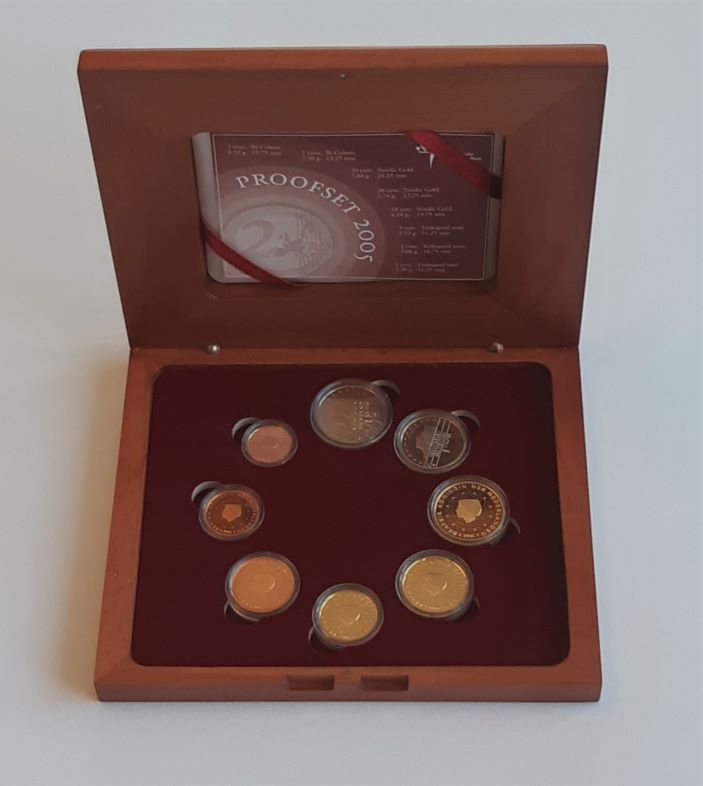
PROOF sets are often stored in wooden presentation cases, with each coin placed individually in a transparent capsule.
Fig. 2: Netherlands euro coin set 2005 in PROOF quality.
Promotional Sets from Non-Eurozone Countries
An interesting category consists of euro coin sets issued by countries that are not members of the eurozone. These sets were created mainly for promotional purposes and never entered real circulation, as these countries continue to use their own national currencies. For collectors, they represent an attractive rarity.
Euro Coin Sets in Our Offer
If you are looking for high-quality euro coin sets, explore our current selection:
Photos used in this article – private collection of the author.