



Transatlantic Flight 1933
Italo Balbo’s Transatlantic Flight of 1933
Early Attempts to Cross the Atlantic
The desire to cross the Atlantic Ocean by air fascinated humanity long before it became technically feasible. Perhaps the most famous (and the first nonstop) successful attempt was made by Charles Lindbergh, who in 1927 flew from New York to Paris without a stopover. However, similar ambitions were emerging in Europe as well. One of the most remarkable achievements of this era was organized in Italy. In 1930, a formation of twelve Savoia-Marchetti S.55 seaplanes departed from the Orbetello Air Base near Rome and successfully reached Rio de Janeiro.
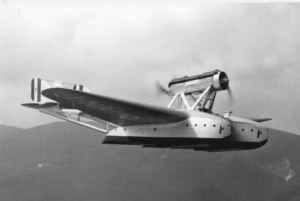
Fig. 1: Savoia-Marchetti S.55X seaplane with registration I – NAPO
(source: warbirdsnews.com)
Philatelic Connections and Early Airmail Stamps
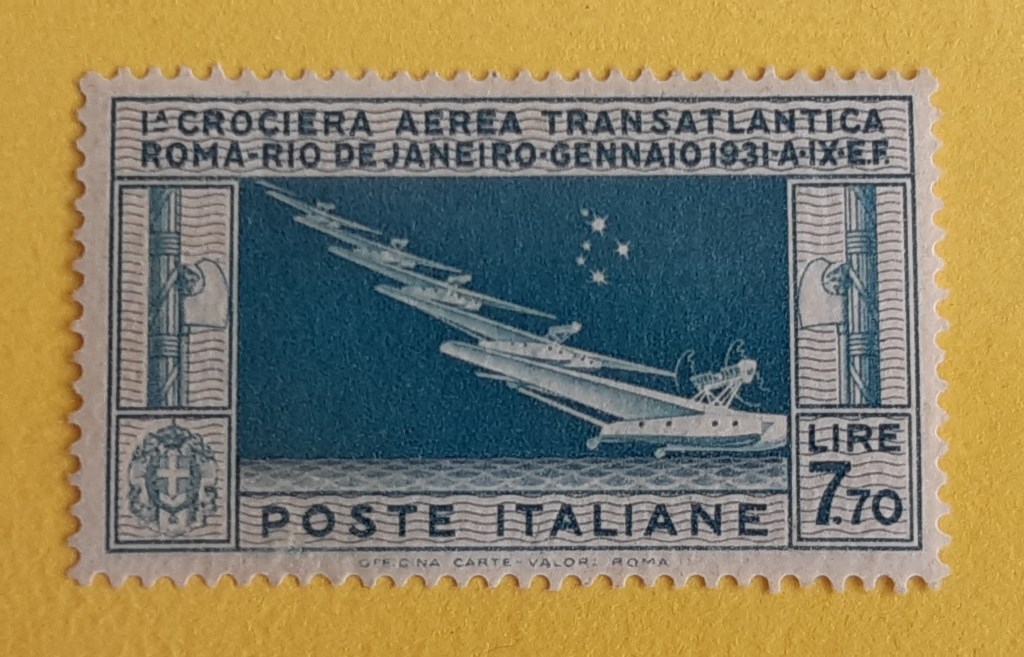
Figure 2: Airmail postage stamp issued in 1930 – Transatlantic Flight from Rome to Rio de Janeiro.
The Great Balbo Air Armada of 1933
An even larger and more ambitious operation took place in 1933, when a formation of twenty-four (originally twenty-five) seaplanes flew from Italy to Chicago and New York. Both major flights – in 1930 and 1933 – were led by the renowned Italian general Italo Balbo. This remarkable achievement of the Italian Air Force was also reflected in philately. In 1930 and 1933, special postage stamps were issued to commemorate these historic flights.
The 1933 stamps are particularly interesting to collectors. They were produced as three-part stamps (hence the nickname “Trittico” – Triptych). Each stamp carried a black “APPARECCHIO” overprint and the registration code of a specific aircraft.
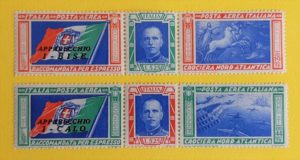
Figure 3: Airmail stamps issued in 1933 – the so‑called “Trittico”.
Stamp Values and Aircraft Registration Codes
The stamps were issued in two denominations: 5.25+19.75 Lira and 5.25+44.75 Lira. They were printed in sheets of 20 stamps. The table below lists the aircraft registration codes in the order in which they appeared on the sheet. The names of the pilots are shown in parentheses.
| I – BALB (Italo Balbo) | I – BORG (Bruno Borghetti) |
| I – PELL (Aldo Pellegrini) | I – MIGL (Alessandro Miglia) |
| I – LONG (Ulysse Longo) | I – ROVI (Umberto Rovis) |
| I – NANN (Umberto Nannini) | I – TEUC (Giuseppe Teucci) |
| I – DINI (Mario Baldini) | I – QUES (Luigi Questa) |
| I – GIOR (Gennaro Giordano) | I – LEON (Leonello Leone) |
| I – RECA (Enea Recagno) | I – VERC (Alessandro Vercelloni) |
| I – BIAN (Vincenzo Biani) | I – NAPO (Silvio Napoli) |
| I – ARAM (Mario Aramu) | I – RANI (Celso Ranieri) |
| I – BISE (Attilio Biseo) | I – CALO (Jacopo Calò Carducci) |
Legacy and Historical Significance
Balbo’s transatlantic flights represented a unique combination of courage, technical innovation, and precise organization. Beyond promoting the Italian Air Force, they also left a lasting mark on philately, as the stamps issued for these flights remain among the most sought‑after items from the 1930s.
Photos 2 and 3 used in this article – private collection of the author.