



Expert Marks in Philately – What They Mean and Why They Matter
The philatelic market contains many forgeries, regummed stamps, and altered items. This is why expertise has become essential. One of its most recognizable results are the expert marks placed on the back of a stamp.
Why stamps are expertised
- Forgeries and altered stamps are common, especially among valuable issues.
- Buyers often require an expert certificate or mark before purchasing.
- Expertise confirms authenticity, condition, and any alterations, increasing trust.
Types of expert marks
Embossed (dry) marks
Pressed into the paper, difficult to forge.
Ink or handwritten marks
Usually initials or symbols of the expert.
Combined systems
Mark + certificate.
Modern structured systems
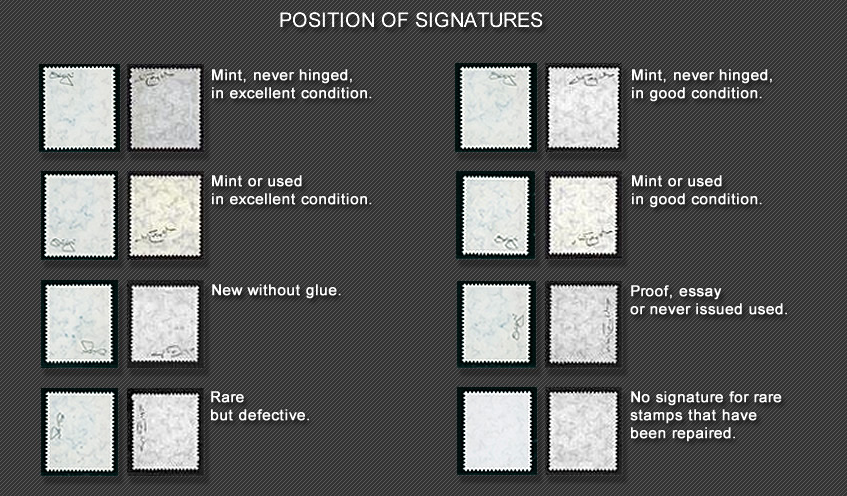
Defined positions and orientations depending on the stamp’s condition.
Where expert marks are placed
Marks are applied on the back side of the stamp:
- lower left corner,
- lower right corner,
- occasionally centrally,
- always discreetly, without damaging the gum.
The meaning of mark placement
Placement often carries specific information:
| Stamp condition | Placement | Meaning |
|---|---|---|
| Mint (unused) | horizontal left | authenticity of unused stamp |
| Used | horizontal right | authenticity of cancellation |
| Perforated / imperforate | various orientations | identifies printing and condition |
| With overprint | specific position | confirms authenticity of overprint |
This structured approach helps prevent forgeries of expert marks and clarifies what exactly the expert has certified.
Example
With permission from the owner, you may use the visual examples from RAYBAUDI: https://www.raybaudi.it/index.php/en/raybaudi-experts-eng/expert-valuations-and-certificates
If you need help to expertise your postage stamp, contact us: Certification – Philately and numismatics – www.vivido.cz